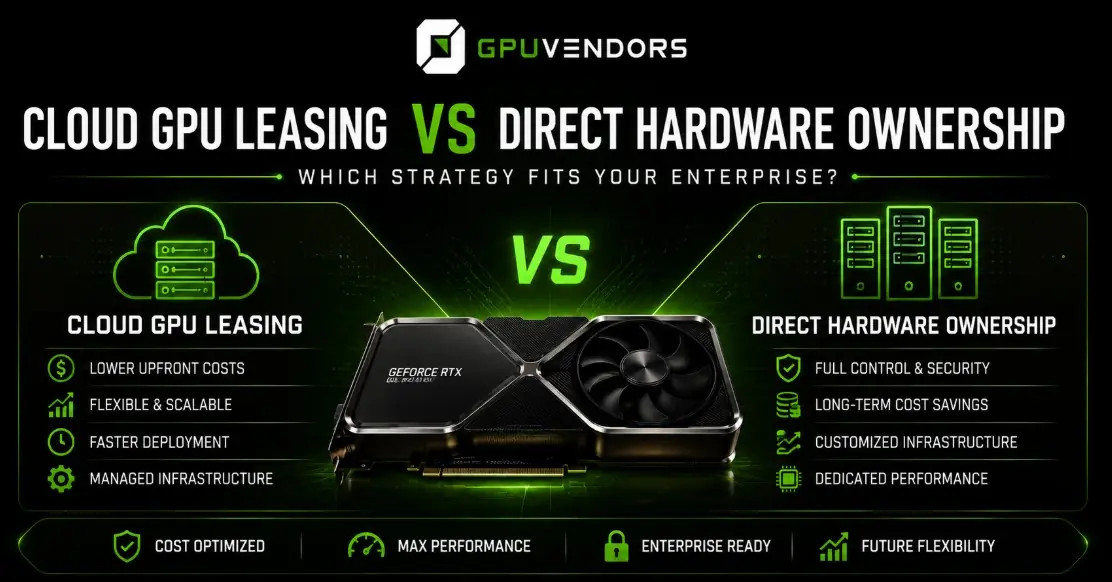
In today's world of high performance computing, paying for the hardware, services, and software is not as simple as it sounds, and every dollar invested must be balanced with the flexibility necessary to meet changing requirements. Data complexity, the need for AI training, and the deployment of big models are unprecedented stress on infrastructure, leading decision makers to a critical choice. They must choose between buying expensive server equipment, or hiring for the flexibility of renting it. The decision you make can have a trickle-down effect on your short-term cash flow, as well as your long-term operational efficiency. Companies can make a comparison and assess their procurement choices by choosing verified components from a trusted best gpu marketplace based on their specific compute needs.
The economic and technical considerations of both strategies help to prevent unforeseen delays in your organization and allow you to get the most value from your investment in heavy computation.
The Case for Direct Hardware Ownership: Control and Long-Term Value
When you buy the physical server hardware, you have 100% control over your server. Having their own infrastructure means that an enterprise's graphics processor, memory module, and storage array are all located onsite or in a dedicated colocation facility. This physical connectivity enables engineering teams to make firmware changes, set up networking configurations, and optimize cooling settings without relying on third parties to provide these services.
Heavy workloads with full-time 24/7 operation may be more beneficial financially when owned over the long term. Once the initial capital investment is amortized across a number of years, the operating expenses are mainly associated with power, maintenance and overheads within the facility. For companies with predictable, steady-state compute needs, external cloud platforms' subscription fees are a recurring cost that can be avoided. It does, however, demand significant initial investment, in-house IT knowledge and expertise in maintenance and readiness to accommodate the hardware obsolescence as new architectures become available.
Cloud GPU Leasing: Case for Agility and Rapid Scalability
Cloud leasing moves the computational infrastructure from a capital expenditure paradigm to an operational expenditure paradigm. Organizations can provision massive computational clusters on the fly without having to invest in expensive servers that may become architectural obsolescence within a couple of years. If you want to do a deeper financial analysis of these operational models, check out our article on GPU Rental vs. Purchase: TCO Analysis for AI Workloads.
This flexibility is extremely advantageous for start-ups, research labs, and businesses with variable workloads. For a project that need a huge foundational model for training, teams can lease or rent up resources as needed and scale them down as soon as the project is done. Reviewing on-demand GPU rental usage options for project iteration can help organizations quickly explore flexible tiers and deployment options. Moreover, cloud providers manage the hardware, its failures, and cooling the data center, allowing internal engineering teams to devote all their attention to software programs and data science.
Financial and Operational Factors to Consider
When considering leasing versus owning, the following are some important operational factors to consider:
Cost of Upfront Capital vs. Cost of Ongoing Expenses: Ownership can be costly while the cost of leasing can be spread over a predictable monthly expenses budget.
Workload Predictability: Cloud leasing can be a huge advantage with project or one-off workloads, whereas continuous, round-the-clock workloads lean toward ownership.
Maintenance Overhead: Instead of having an internal staff that is responsible for hardware repairs, parts replacement, and troubleshooting, the maintenance will be turned over to the provider when leasing.
Technological Obsolescence: Hardware architectures change rapidly, and by taking the lease route, it enables easy upgrading to the latest generations of hardware without the need to dispose of old equipment.
Putting the Strategic Decision into your Organization
The right infrastructure approach is dependent on matching the budget with the computing objectives. There are many contemporary businesses that use a mix of both, with clusters of leased cloud-based resources for quick prototyping and unsteady burst training, and remaining production systems on owned equipment. Careful consideration of your workload frequency, internal technical skills, and capital requirements can create a computing base for long-term success.