For years, enterprise AI procurement followed a simple rule: pick a vendor, standardize the fleet, and stay there. That rule is breaking down. A growing number of frontier AI teams and large enterprises now deliberately mix AMD Instinct and NVIDIA silicon in the same inference pipeline - not as a stopgap, but as a designed architecture. As more buyers choose to buy enterprise AI & GPU servers online across multiple vendors rather than locking into one supplier, cross-platform hardware fabrics are becoming the standard layout path for serious inference infrastructure. The reasoning behind it is more engineering-driven than it might first appear.
What's Driving the Shift Toward Multi-Vendor Server Sourcing
Large language model inference isn't one uniform workload - it's two distinct phases with very different hardware appetites.
Prefill is the phase where a model processes the incoming prompt in a single, compute-heavy pass. It's dominated by large matrix multiplications (GEMMs), so it rewards raw compute throughput and fast on-chip scratchpad memory.
Decode is the phase that follows, generating tokens one at a time while continuously reading from the key-value (KV) cache. This phase is memory-bandwidth-bound, not compute-bound - its performance ceiling is set by how much data can move in and out of GPU memory per second, not by how many FLOPS the chip can push.
These two phases want fundamentally different hardware profiles. Historically, teams ran both phases on the same GPU type, which meant compromising one phase to accommodate the other. Disaggregating prefill and decode onto separate hardware pools - and increasingly, separate vendor hardware pools - lets each phase run on silicon actually built for its bottleneck. That's a key reason procurement teams increasingly shop across brands rather than a single catalog when they buy enterprise AI and GPU servers online.
The Engineering Metrics Behind Cross-Platform Fabrics
This isn't a theoretical exercise; it's grounded in measurable architectural differences between AMD and NVIDIA accelerators.
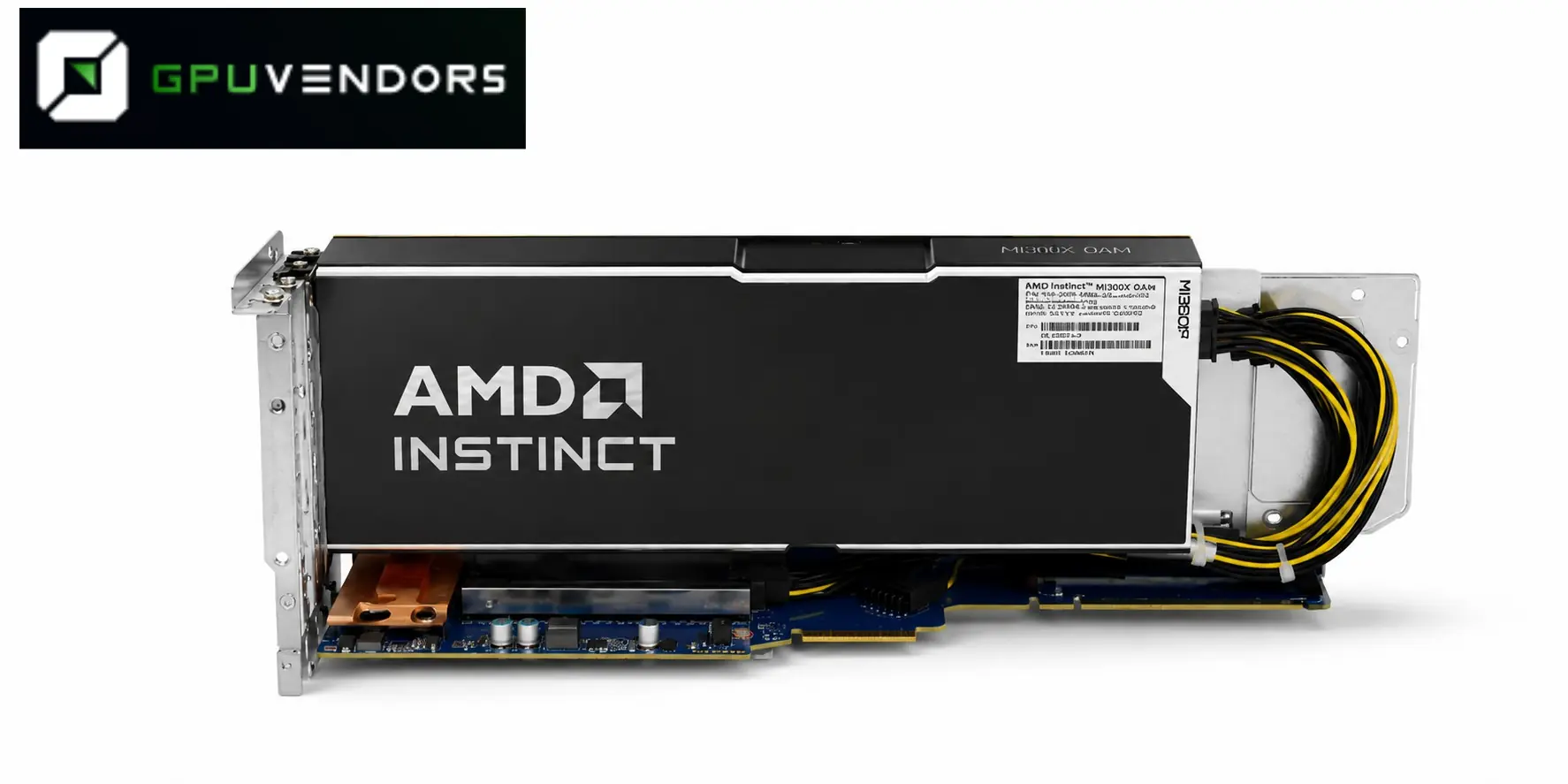
AMD's Instinct MI300X, for instance, offers substantially more HBM capacity and higher memory bandwidth than NVIDIA's H100 - a structural advantage for the memory-bandwidth-bound decode phase, where holding a larger KV cache in fast memory directly translates to higher throughput and more concurrent requests served.
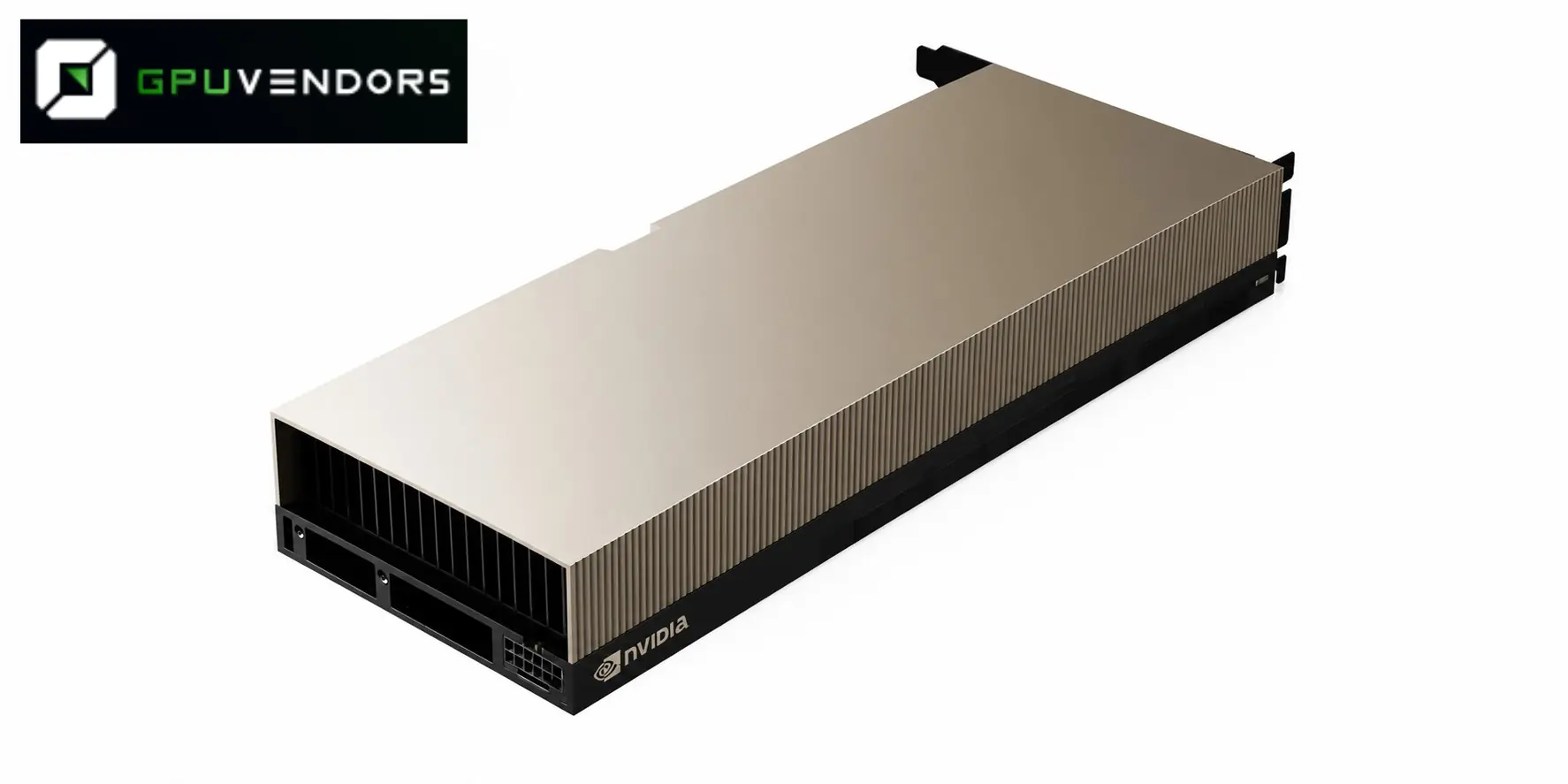
NVIDIA's H100, by contrast, carries a larger per-SM scratchpad and L1 memory footprint, which lets it sustain higher compute utilization during prefill's dense GEMM operations, even in scenarios where its peak theoretical FLOPS aren't the highest on paper.
The practical result: assign prefill to compute-optimized NVIDIA nodes and decode to bandwidth-optimized AMD Instinct nodes, connect the two pools with a KV cache transfer layer over RDMA, and each phase runs closer to its hardware's actual ceiling instead of both phases settling for a shared compromise.
This pattern is now supported natively across the major serving stacks - vLLM, SGLang, NVIDIA Dynamo, and TensorRT-LLM all implement some form of prefill-decode (PD) disaggregation, and cross-vendor KV cache transport layers (such as AMD's MORI-IO connector) are purpose-built to make the handoff between architectures workable at production scale.
Why This Translates to Double-Digit TCO Gains
Running a single vendor's high-end GPU across both phases means every unit is provisioned for the more demanding of the two workloads, even during the phase where that capability goes unused. A compute-optimized chip idles its excess memory bandwidth during prefill; a bandwidth-optimized chip leaves compute headroom on the table during decode.
Heterogeneous fabrics fix this by matching each pool's spend to its actual bottleneck. Compute-heavy prefill nodes don't need to carry premium memory capacity they won't fully use. Bandwidth-heavy decode nodes don't need top-tier compute they won't fully exercise. The result is a leaner bill of materials per unit of effective throughput - which is where the reported double-digit total cost of ownership improvements are coming from. It's not a discount from any single vendor; it's the removal of structural waste built into single-vendor deployments, and it's a big part of why procurement teams now buy enterprise AI and GPU servers online from multiple manufacturers instead of one.
The Engineering Cost of Running Across Architectures
None of this is free. Cross-vendor fabrics introduce real complexity that procurement teams need to plan for:
- KV cache transport overhead. Moving cache state between architecturally different GPUs over the network adds latency that has to be engineered around, typically via RDMA-based connectors rather than standard interconnects.
- Software stack compatibility. Not every serving framework supports every hardware combination equally well; validating your specific model and framework against a cross-vendor pipeline is a prerequisite, not an afterthought.
- Operational overhead. Two hardware ecosystems mean two sets of drivers, firmware cadences, and monitoring tooling to maintain.
These costs are real, but for high-volume inference workloads, they're increasingly outweighed by the efficiency gains - which is exactly why this pattern has moved from research papers into production deployments at scale.
Auditing Specs Before You Buy
Before building a heterogeneous fabric, procurement and infrastructure teams need to compare the actual specifications driving these decisions - HBM capacity, memory bandwidth, compute throughput, TDP, and interconnect support - side by side, across vendors, not buried in separate spec sheets.
Use our marketplace comparison engine to audit AMD Instinct and NVIDIA specifications and form factors side-by-side before you buy enterprise AI & GPU servers online: Compare GPUs on GPU Vendors →
Running your candidate hardware through a direct spec comparison surfaces exactly where each platform's advantage lies for your workload, rather than relying on generic vendor benchmarks that don't reflect your actual prefill-to-decode ratio.
The Bottom Line
Heterogeneous GPU fabrics represent a maturing of AI infrastructure strategy - a shift away from single-vendor uniformity and toward workload-aware hardware assignment. As prefill-decode disaggregation becomes standard across major serving frameworks, and as cross-vendor KV cache transport matures, the engineering barrier to running AMD Instinct and NVIDIA silicon side by side keeps shrinking, while the TCO case for doing so keeps growing.
For enterprises building or refreshing inference infrastructure in 2026, the question is no longer whether to standardize on one vendor. It's whether your prefill and decode workloads are matched to the hardware built for them - and whether, when you buy enterprise AI & GPU servers online, your procurement process is set up to audit that match before the purchase order goes out.
FAQ
1. What are heterogeneous AI fabrics?
Heterogeneous AI fabrics connect different GPU clusters, allowing each AI workload to run on the hardware best optimized for performance and efficiency.
2. How does KV-cache transfer improve AI inference?
KV-cache transfer moves cached LLM data between GPU clusters, reducing latency, boosting throughput, and improving GPU resource utilization.
3. What should I consider when buying enterprise AI GPU servers?
Choose servers with scalable networking, efficient cooling, high-speed fabrics, and hardware optimized for your AI training and inference workloads.