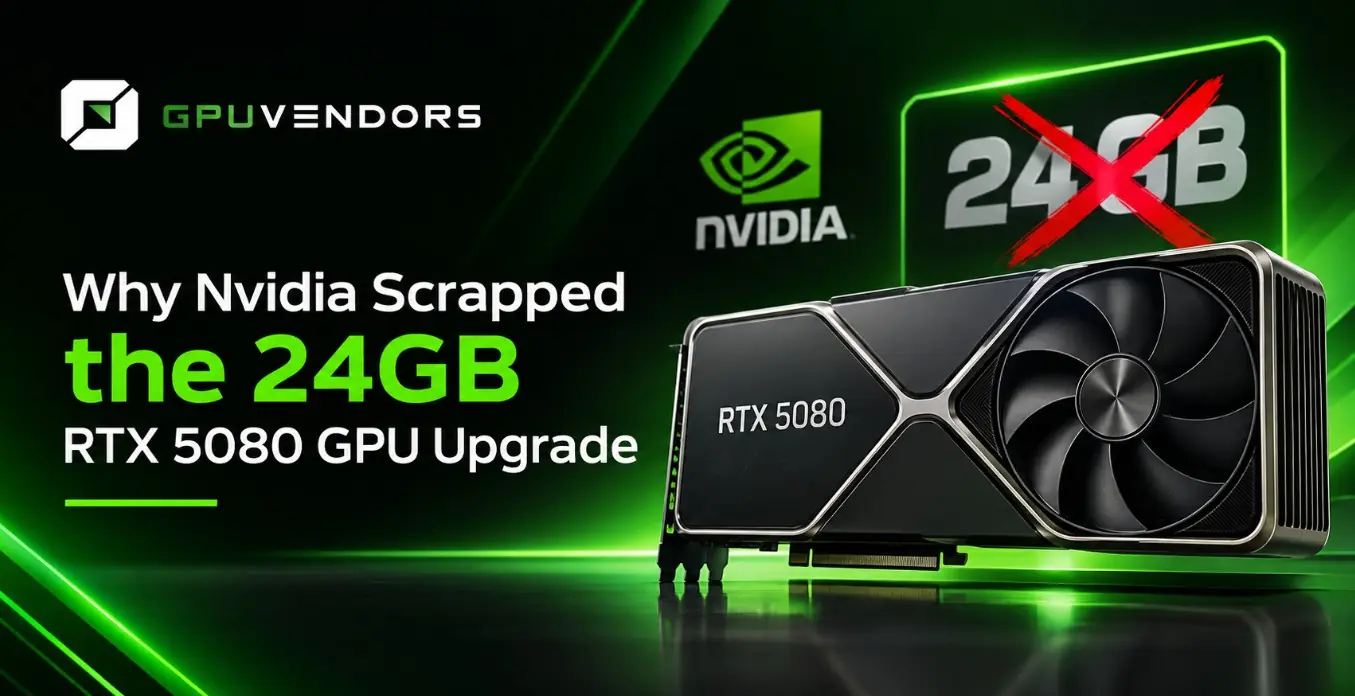
Reports say Nvidia dropped a 24GB RTX 5080 over memory costs, and the reasoning matters more than the card itself
A 24GB version of the GeForce RTX 5080 was widely expected as an upgrade to the standard 16GB model. Several outlets now report that Nvidia has shelved it. The reported reason is the cost and supply of the 3GB GDDR7 memory modules that a 24GB design would need. Nvidia has not published a detailed explanation, so the account below rests on press reporting and should be read with that in mind.
This article explains what has been reported, what remains unconfirmed, and why the story matters for anyone thinking about buying a card in the current market.
What has been reported
Multiple tech outlets, including Wccftech and PC Guide, report that the 24GB RTX 5080 has been halted or cancelled. The explanation given is that 3GB GDDR7 memory chips are too expensive for the configuration to make sense at a sensible price. Other reports describe a broader pause in refresh cards, with Nvidia reportedly telling partners that its RTX 50 SUPER series has been delayed indefinitely.
Those reports should be treated as reports. They rely on sources that have not been named publicly, and Nvidia has not confirmed the decision in an official statement. A future product change can also look different from early reporting, so readers should watch for an official announcement before drawing firm conclusions.
Why memory is the core issue
Memory capacity is one of the most expensive parts of a graphics card, and the cost of the chips used in a design can decide whether a product makes financial sense. A 24GB card built from 3GB modules is a different cost proposition from a 16GB card built from 2GB modules, even before taking board complexity and power delivery into account. If the premium for the larger memory chips is too high, a vendor can decide the product will not sell at a price that works for buyers or partners.
The broader memory market also matters. Industry coverage in 2026 has pointed to memory makers shifting capacity toward high-bandwidth memory for AI data centers, which can tighten supply for the GDDR chips used in gaming cards. Exeton's 2026 shortage guide, 2026 GPU Shortage Explained, describes that pressure, though it is a reseller's marketing content and its figures should be checked against independent data before you rely on them.
What a 24GB card would have offered
Extra memory matters most when a workload needs more space than a card provides. A 24GB model would have given players room for very large texture packs and heavy ray tracing scenes, and it would have given creators more headroom for high-resolution timelines and large scenes. For local AI, capacity decides which models fit on the card at all, so a larger memory pool can be the difference between running a model and not being able to load it.
That is also why the reported cancellation drew attention. Buyers who wanted more capacity without moving to a much more expensive tier had a clear reason to watch for a 24GB option, and its absence changes the choice for them.
What this means for the RTX 5080 lineup
The standard RTX 5080 remains a 16GB card, and it is the model most buyers will see on shelves. Anyone who wanted 24GB on that tier now has to look elsewhere, or wait for a different product that may or may not arrive. Buyers who need more memory for AI workloads or high-resolution creative work should not assume a larger version is coming soon.
For gaming, 16GB is enough for many current titles at high settings, although demanding games at 4K or with large texture packs can push that limit. The right capacity depends on your resolution and your software, so match the card to your actual workload rather than to the rumored product.
Should you buy now or wait?
Reported cancellations do not decide the question on their own. A buyer who needs a card now faces a market where prices and availability have been shifting. Exeton's guide argues that waiting can mean higher channel premiums or limited stock, and it advises locking in allocations early. That is a sales view, and it is not a forecast anyone can verify. A more balanced approach is to set a budget, check current prices at several sellers, and compare the total cost including any power supply or cooling upgrades.
Reports about unreleased products often change, and a product that looks cancelled can return in a different form or under a new name. Keep that uncertainty in mind when comparing the expected value of waiting against the cost of a card you need now.
If you can wait, watch for official announcements from Nvidia and its board partners, since they will confirm or correct the reports. If you cannot wait, buy the card that meets your resolution and workload needs with a warranty you trust.
Where to compare cards
Shoppers can compare models and check specifications on the best gpu marketplace, and line up options on the Compare the GPU's page before buying. Use both to compare memory size, power draw, and warranty terms across the current lineup.
The bottom line
The reported cancellation of a 24GB RTX 5080 points to memory costs as a limiting factor in the current generation. Until Nvidia confirms the decision, treat it as a report rather than fact. For buyers, the practical takeaway is simple: choose a card by the memory your workload needs today, check current prices carefully, and do not plan a purchase around a product that has not been officially announced.